
1,999 €
Deliveryabout 1–12 days
Returns–
Colour: grey No reviews at this shop yet
To Kaufland.de Its kind or too few of its facts are known yet, so it is not in our ranking.
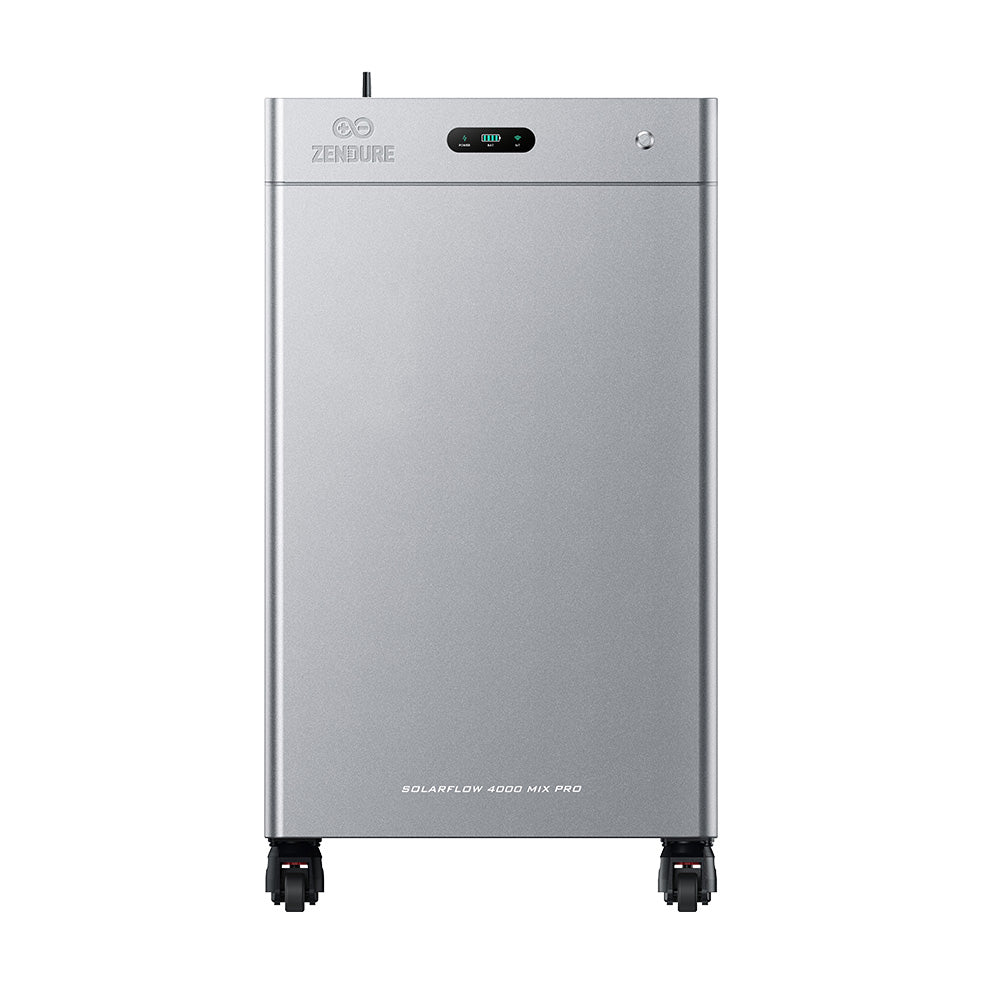
On 3 November 2026 the lowest price for the Zendure SolarFlow 4000 Mix Pro is 1,999 € at Kaufland.de, delivery to Germany included.
All prices include VAT and delivery to Germany. We may earn a commission when you buy through these links. It never changes our ranking.

At the same price, a shop in your own country comes first, then a shop selling its own stock before a marketplace seller, then the shorter delivery time, then free returns and the longer return window. Commission never counts.
Follow price changes via RSS. A feed reader (RSS app) shows a new entry at every change, with no e-mail address needed.
The numbers that matter first, then every fact by group. As published by the maker or the shop we read it from.
Zendure · on the market since May 2026
Source: derived, no source of its own · checked on 2 Nov
How the battery connects to your home: to a socket, to a balcony solar system, through a hybrid inverter, on the AC side of an installed system, as a module for an inverter, or as a portable power station.
8 kWh on this model
Lowest
1 kWh Highest
8 kWh Middle
2.4 kWh
Higher than 31 of the 34 models we track.
Source: Manual · checked on 2 Nov
The cells’ full capacity, before the reserve the battery keeps. The usable capacity is the figure to compare.
6 on this model
Lowest
1 Highest
6 Middle
5
Higher than 29 of the 37 models we track.
Source: Manual · checked on 2 Nov
How many battery units one system takes.
25.6 V on this model
Lowest
16 V Highest
102.4 V Middle
41.6 V
Lower than 14 of the 21 models we track.
Source: Manual · checked on 2 Nov
The battery’s nominal voltage. A high-voltage battery works only with an inverter made for it.
314 Ah on this model
Lowest
20 Ah Highest
314 Ah Middle
60.6 Ah
Higher than 13 of the 19 models we track.
Source: Manual · checked on 2 Nov
The cells’ capacity in ampere-hours. Times the voltage, it gives the nominal capacity.
4,000 W on this model
Lowest
800 W Highest
6,900 W Middle
1,200 W
Higher than 32 of the 36 models we track.
Source: Manual · checked on 2 Nov
The most power the battery delivers to your home without a break, as the maker states it.
800 W on this model
Lowest
200 W Highest
800 W Middle
800 W
Higher than 3 of the 26 models we track.
Source: Manual · checked on 2 Nov
The output the battery is set to when it arrives, which can be lower than its maximum.
7,200 W on this model
Lowest
1,200 W Highest
8,000 W Middle
5,520 W
Higher than 6 of the 11 models we track.
Source: zendure.de · checked on 2 Nov
The power it delivers for a short time, such as when a device starts up.
4,000 W on this model
Lowest
800 W Highest
4,000 W Middle
2,050 W
Higher than 28 of the 30 models we track.
Source: Manual · checked on 2 Nov
How fast the battery charges from the grid.
Source: derived, no source of its own · checked on 2 Nov
Where the battery connects to the solar system: on the DC side, between the panels and the inverter, or on the AC side, behind the inverter.
8,000 W on this model
Lowest
0 W Highest
8,000 W Middle
1,900 W
Higher than 27 of the 28 models we track.
Source: Manual · checked on 2 Nov
The most solar power the battery takes in directly from panels.
2 on this model
Lowest
2 Highest
4 Middle
3
Lower than 14 of the 25 models we track.
Source: Manual · checked on 2 Nov
How many separate strings of panels it takes, each tracked for its best power.
400 V on this model
Lowest
55 V Highest
600 V Middle
60 V
Higher than 17 of the 20 models we track.
Source: Manual · checked on 2 Nov
The highest voltage the solar input takes. A string of panels must stay below it, on a cold day too.
30 V on this model
Lowest
10 V Highest
30 V Middle
16 V
Higher than 21 of the 24 models we track.
Source: Manual · checked on 2 Nov
The lowest voltage at which the tracker works at full power.
400 V on this model
Lowest
48 V Highest
550 V Middle
60 V
Higher than 21 of the 23 models we track.
Source: Manual · checked on 2 Nov
The highest voltage at which the tracker works at full power.
17.2 A on this model
Lowest
14 A Highest
36 A Middle
18 A
Lower than 14 of the 21 models we track.
Source: Manual · checked on 2 Nov
The highest current one tracker takes. A panel that delivers more is held to it.
Source: zendure.de · checked on 2 Nov
How much of the energy that goes in comes out again, as the maker states it. A higher figure loses less on every cycle.
Source: zendure.de · checked on 2 Nov
What the efficiency figure covers. AC to AC counts the inverter’s losses both ways and is the figure to compare. A DC figure leaves the inverter out, so it reads higher.
Source: zendure.de · checked on 2 Nov
The conditions the maker gives for its efficiency figure, such as the power and the temperature.
Source: Manual · checked on 2 Nov
The cells’ chemistry. LFP cells last many cycles and are less prone to overheating than NMC cells.
10,000 on this model
Lowest
3,000 Highest
10,000 Middle
6,000
Higher than 17 of the 25 models we track.
Source: zendure.de · checked on 2 Nov
How many full charge cycles the maker rates the cells for.
70 % on this model
Lowest
60 % Highest
80 % Middle
70 %
Higher than 2 of the 17 models we track.
Source: zendure.de · checked on 2 Nov
The share of capacity the maker says is left after the rated cycles.
10 years on this model
Lowest
2 years Highest
12 years Middle
10 years
Higher than 5 of the 38 models we track.
Source: zendure.de · checked on 2 Nov
How many years the maker’s warranty on the battery runs.
Source: zendure.de · checked on 2 Nov
What the battery powers during a power cut: nothing, a device at its own socket, chosen circuits, or the whole home.
3,680 W on this model
Lowest
1,000 W Highest
3,680 W Middle
1,600 W
Higher than 20 of the 23 models we track.
Source: Manual · checked on 2 Nov
The most power the battery delivers during a power cut.
10 ms on this model
Lowest
10 ms Highest
20 ms Middle
15 ms
Lower than 8 of the 14 models we track.
Source: zendure.de · checked on 2 Nov
How long the power is off before the backup takes over. The shorter, the more devices keep running.
Source: zendure.de · checked on 2 Nov
Whether the panels keep charging the battery while the grid is down.
Source: Manual · checked on 2 Nov
How the battery connects to your network or the app.
Source: zendure.de · checked on 2 Nov
Where the maker allows the battery to stand.
Source: Manual · checked on 2 Nov
How well the case keeps out dust and water. A battery that stands outdoors needs a higher rating.
-20 °C on this model
Lowest
-20 °C Highest
-10 °C Middle
-20 °C
Lower than 1 of the 31 models we track.
Source: Manual · checked on 2 Nov
The coldest temperature at which the battery works.
55 °C on this model
Lowest
45 °C Highest
60 °C Middle
55 °C
Higher than 2 of the 31 models we track.
Source: Manual · checked on 2 Nov
The warmest temperature at which the battery works.
0 °C on this model
Lowest
-20 °C Highest
0 °C Middle
0 °C
Higher than 7 of the 19 models we track.
Source: Manual · checked on 2 Nov
The coldest temperature at which the battery still charges. Many cells may not charge below 0 °C without heating.
Source: Manual · checked on 3 Nov
The warmest temperature at which the battery still charges.
28 of the 28 models we track have this.
Source: Manual · checked on 2 Nov
Whether the battery warms its own cells, so it charges in cold weather.
82 kg on this model
Lowest
4.7 kg Highest
82 kg Middle
25.9 kg
Higher than 35 of the 37 models we track.
Source: Manual · checked on 2 Nov
The weight of the battery, or of one unit for a battery built from several.
43 dB on this model
Lowest
30 dB Highest
43 dB Middle
30 dB
Higher than 8 of the 11 models we track.
Source: zendure.de · checked on 2 Nov
How loud the battery is while it runs, as the maker states it.
Source: zendure.de · checked on 2 Nov
Whether you set the battery up yourself or an electrician has to connect it.
50 mm on this model
Lowest
30 mm Highest
50 mm Middle
30 mm
Higher than 3 of the 5 models we track.
Source: Manual · checked on 2 Nov
The free space the maker asks for around the battery.
Sources: Manual · zendure.de
The maker
Zendure is an energy technology company with teams in Silicon Valley in the USA, the Greater Bay Area in China, Japan and Germany. In Europe it sells through Zendure DE GmbH in Düsseldorf. Its balcony and home batteries include the SolarFlow 2400 AC and the SolarFlow Hub 2000.
We have just updated the information on this page. Reload the page to see the latest version.